















Illegal, Unscientific, and Intentional: What the 5th Circuit Said About the Mail-Order Abortion Regime
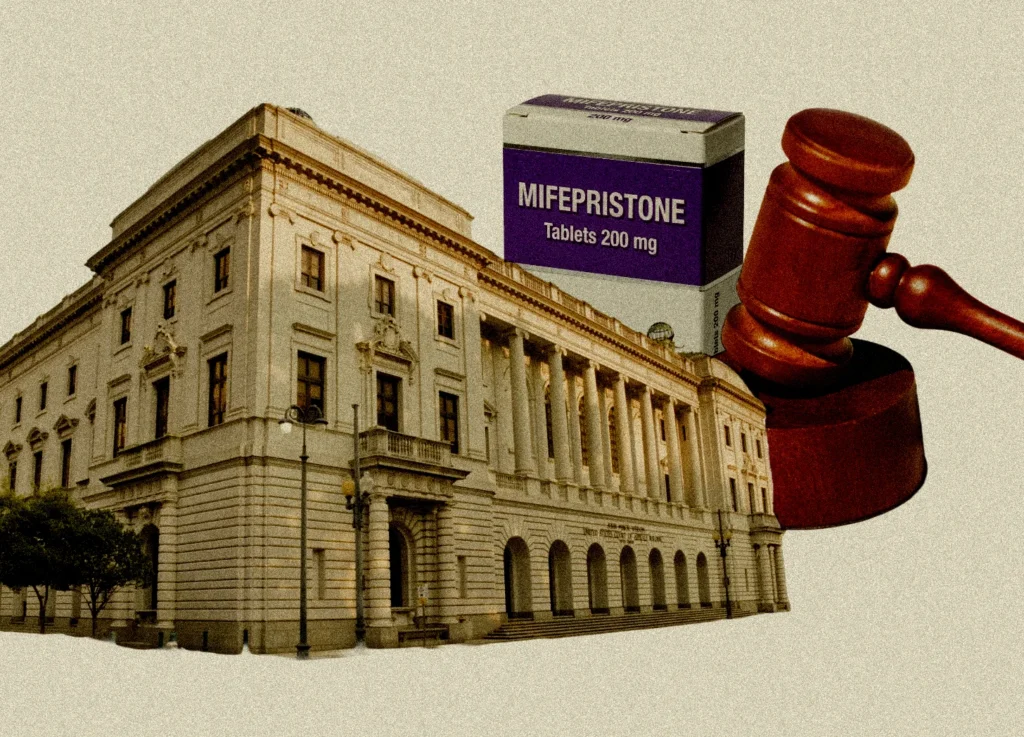
In 2023, the Biden administration formally changed federal regulations on the abortion drug mifepristone to remove the requirement of an in-person medical visit, after “temporarily” suspending it during the Covid pandemic. As a result, activist groups are now able to prescribe the drugs online (without ever seeing the patient) and mail the drugs into pro-life states in circumvention of any local laws. Some states that have passed full, 9-month protections for babies in the womb now have more abortions within their borders each year than they did under Roe v. Wade.
Earlier this month, as part of an ongoing lawsuit by the State of Louisiana and Rosalie Markezich, a survivor of a coerced abortion, the 5th U.S. Circuit Court of Appeals found that the Biden changes were:
- Scientifically unsupported;
- Likely illegal; and
- Part of an intentional plan to nullify state pro-life laws after Roe.
The FDA essentially concedes every major fact that led the court to these conclusions. Health and Human Services Secretary Robert F. Kennedy Jr. told the Senate last year that “during the Biden administration, they actually twisted the data” to hide a “very high safety signal” pointing to severe dangers from these drugs and promised the FDA would conduct a full review of the drug’s safety.
The 5th Circuit makes several strong points in its decision (internal citations have been omitted).
Common Sense Isn’t On Hold
As the 5th Circuit points out, it makes no sense to operate in the meantime under a rule that the FDA itself views as unsupported, dangerous, and probably illegal:
We have now three times found that the agency’s progressive relaxation of mifepristone’s guardrails likely lacked a basis in data and scientific literature. FDA itself now concedes the regulations were marred by “procedural deficits” and a “lack of adequate consideration.” The public interest is not served by perpetuating a medical practice whose safety the agency admits was inadequately studied. Indeed, the public interest demands the opposite.
The FDA does not need to operate under Biden’s bad-faith, illegal rule (the “2023 REMS”) while it studies what to do next:
Granting a stay would do nothing to prevent FDA from completing its review of mifepristone’s safety protocols.
And consider what spurred that review: the agency’s concession that its prior evaluation of mifepristone—including the 2023 REMS—was marred by “procedural deficits” and a “lack of adequate consideration.” As Louisiana points out, it “makes no sense to deny preliminary relief on the grounds that agency action is so unlawful that the agency openly concedes a review is necessary.”
Lawbreaking By Design
The Biden rule was designed in part to help activists break the laws of pro-life states. Citing Biden’s post-Dobbs executive order, the Court found that Biden’s rule was intended to undermine pro-life state laws once Roe was overruled:
An avowed purpose of the 2023 REMS was to expand access to medication abortion. […] Predictably, the regulation has had that effect in Louisiana, despite the fact that its laws ban the practice. By ending the in-person dispensing requirement, FDA opened the door for mifepristone to be remotely prescribed to Louisiana women. The record shows that the policy now facilitates nearly 1,000 illegal abortions in Louisiana per month.
[…] As the district court explained, “out-of-state medical providers” have responded to the 2023 REMS by “expanding mifepristone access to pro-life states like Louisiana in ways that [are] entirely predictable.” That should surprise no one: after all, ensuring out-of-state medical providers could prescribe mifepristone to women in states that restrict abortion was a goal of the regulation.
The Biden rule, they found, “sanctions and facilitates conduct with the express purpose of undermining Louisiana’s legal restrictions on abortion” and “causes ‘federal interference with the enforcement of [Louisiana] law[.]’”
As a result, Louisiana’s laws are being nullified:
Every abortion facilitated by FDA’s action cancels Louisiana’s ban on medical abortions and undermines its policy that “every unborn child is human being from the moment of conception and is, therefore, a legal person.”
Not Safe or Scientific
The risks to the women who take these drugs are enormous. The Court found that the FDA’s “own documents… prove that emergency room care is statistically certain in hundreds of thousands of cases” and – the district court concluded — “[r]emotely dispensing the drug will only exacerbate those risks[.]”
The supposed evidence the Biden administration relied on when allowing abortion drugs by mail was so shoddy that the court ruled Louisiana would have no problem showing that it was unlawful, due to arguments and facts that the “FDA does not contest[.]”:
Louisiana must make a strong showing that the 2023 REMS was not “reasonable” or “reasonably explained.” […]
This factor plainly favors Louisiana and FDA does not contest it. To the contrary, as the district court explained, the agency “essentially acknowledged APA procedural deficits with respect to mifepristone” by “stating that [its] intention to review the mifepristone regulatory framework was precipitated by ‘the lack of adequate consideration underlying the prior REMS approvals.’”
Based on the same defects, our court has previously concluded that FDA’s actions here were likely unlawful. […]
First, in relaxing mifepristone’s in-person dispensing requirement, FDA gave “dispositive weight” to the lack of adverse-event data in a reporting system (known as “FAERS”). The problem? FDA had previously eliminated the requirement to report mifepristone’s adverse events to FAERS. Obviously, “[i]t’s unreasonable for an agency to eliminate a reporting requirement for a thing and then use the resulting absence of data to support its decision.”
Second, FDA “relied on various literature relating to remote prescription of mifepristone—despite FDA’s admission that the literature did not affirmatively support its position.” The agency explained the literature was “not adequate on [its] own to establish the safety of the model of dispensing mifepristone by mail.” This is a textbook example of arbitrary and capricious agency action. […]
States Have a Strong Case
Accordingly, like the district court, we conclude Louisiana has strongly shown a likelihood of winning its APA challenge to the 2023 REMS.
As the Court found, the Biden rules were a likely-illegal part of a scheme to circumvent pro-life laws in the states after Dobbs. The Biden administration increased the risks to women and undermined pro-life state’s sovereignty by pushing a rule change that was unsupported by the evidence and can’t survive legal scrutiny. The same facts, they found, that the FDA has cited as justifying its review also lead to the conclusion that the original regulation was unlawful.
There is no need to continue relying on an unlawful and unsafe rule—a rule based on data the administration says was “twisted” to hide key evidence—while the FDA conducts its study. The evidence is overwhelming enough that in-person dispensing should be restored while that process is underway.
Read the full court decisions here.
Start a Fundraiser

We fight for the voiceless everyday and we want you to stand with us. Become a Champion of LIFE by being an official fundraiser for SBA.
Fundraise