








Equipping Capitol Hill with the Facts to Defund Big Abortion
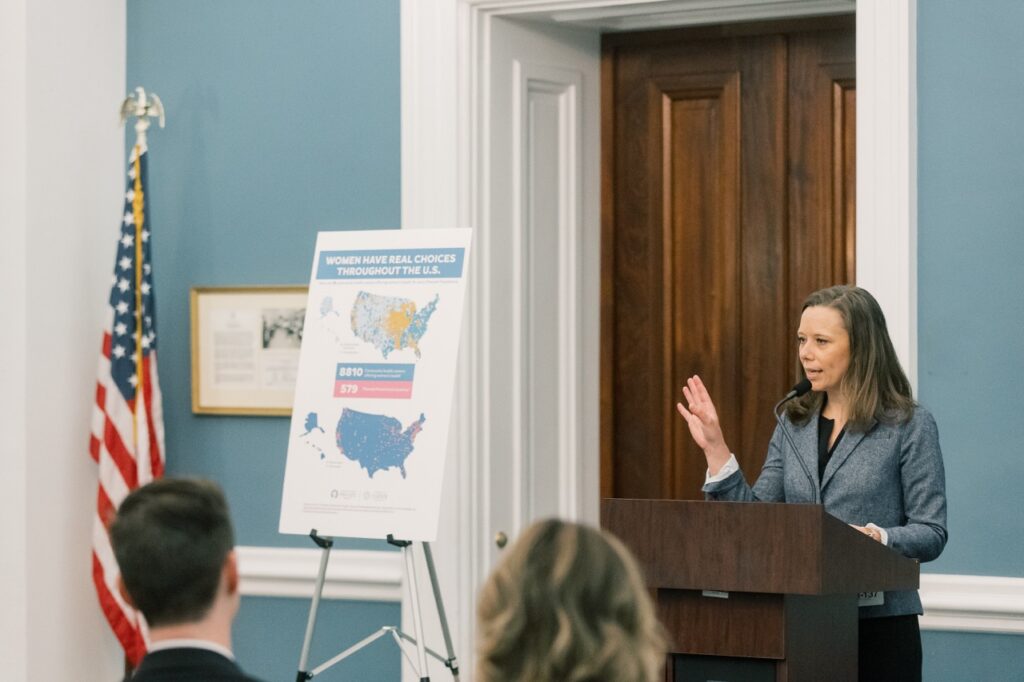
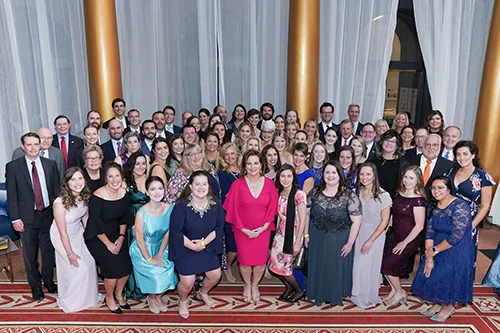
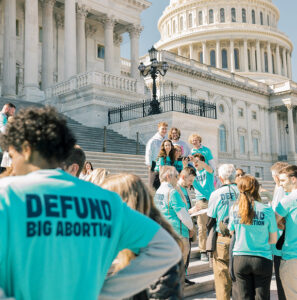
As Congress weighs key budget decisions through the reconciliation process, SBA Pro-Life America and Charlotte Lozier Institute (CLI) are actively engaging Capitol Hill — helping ensure that pro-life voices and facts are in front of those who help shape national policy. Last week SBA and CLI hosted a congressional staff briefing in the U.S. Capitol to inform congressional staffers, who play a pivotal role in advising their members of Congress on these issues, about taxpayer funding of the abortion industry and the life-affirming alternatives available to women across the country.
With reconciliation discussions underway, and funding decisions on the table, the timing of the briefing couldn’t be more critical. Big Abortion and its allies are already working to drive the narrative on Capitol Hill, claiming that any attempt to redirect funds would strip women of essential health care. But CLI’s research shows that the real picture is far different.
Staff from both the House and Senate gathered to hear not only the facts about what Planned Parenthood actually provides and how it’s funded, but also to learn about the thousands of community health centers that already outnumber Planned Parenthood facilities by 15 to 1, and serve a greater percentage of women.

Autumn Christensen, SBA’s Vice President of Public Policy, kicked off the briefing by outlining how the reconciliation process presents a real opportunity to end the taxpayer funding of the abortion industry. “What’s exciting is we are in a moment in history that we have a chance to end the majority of taxpayer funding to Big Abortion,” she said.
She emphasized that this shift wouldn’t reduce Medicaid benefits for women — it would simply stop channeling federal dollars to a billion-dollar organization increasingly focused on abortion, gender transitions, and political campaigning — including, notably, campaigning against many of the very lawmakers these staffers work for.

“They’ll tell you they provide contraception and women’s health care,” Christensen said, “but their own reports show that’s less and less true. Abortions are up. Gender transitions are up. And meanwhile, screenings and basic care have dropped dramatically.”
Planned Parenthood’s own numbers show they performed 402,230 abortions in a single year, representing 96.9% of their pregnancy-related services. While contraception services have dropped by 39% since 2010, and other services like cancer screenings and prenatal care have declined by more than 70% over the past decade.
Autumn also referenced a recent New York Times article highlighting disturbing medical negligence within Planned Parenthood facilities. “Even the New York Times — no friend to the pro-life movement — has acknowledged how bad things are inside Planned Parenthood clinics,” she said. “Yet they still receive hundreds of millions of taxpayer dollars every year.”
Planned Parenthood’s largest source of government revenue is Medicaid, Christensen explained. But under reconciliation, individual women’s Medicaid benefits wouldn’t change — big abortion businesses like Planned Parenthood would simply be ineligible to receive those funds. That distinction, she noted, is key for members concerned about disrupting access to women’s health care.
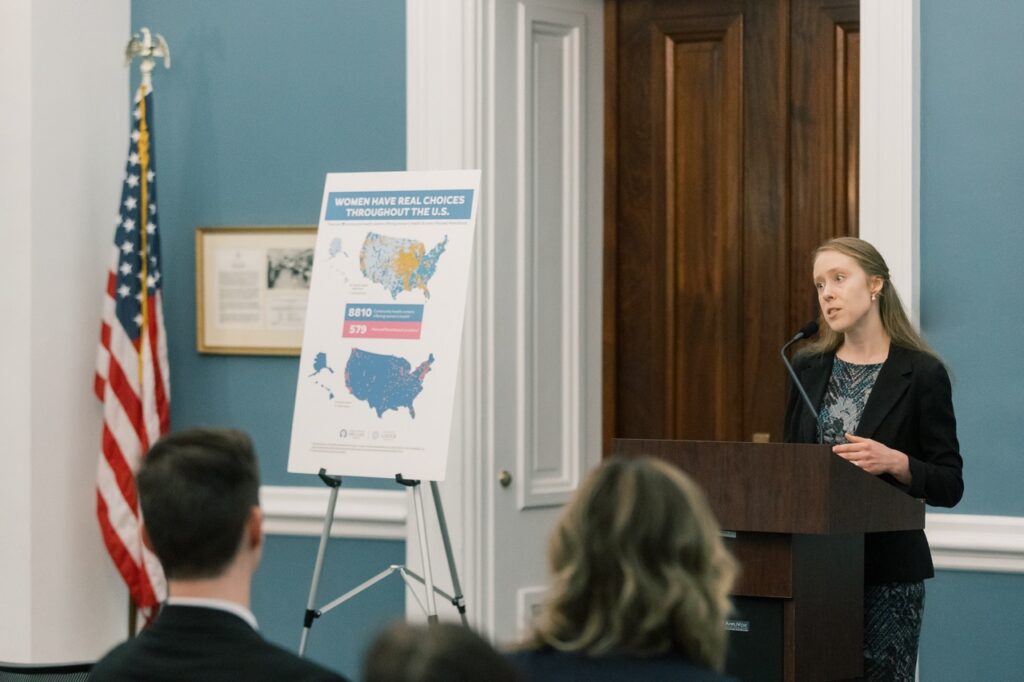
Tessa Cox, Senior Research Associate at the Charlotte Lozier Institute, followed with CLI’s newly released findings.
“At CLI, we’re answering the question we keep hearing: where will women go?” Cox said. “And the answer is — they already have better options.”
She shared CLI’s new national map comparing Planned Parenthood locations to community health centers across the country. The difference is stark: more than 8,800 community-based health centers offering women’s health services, compared to just 579 Planned Parenthood facilities. These alternatives already serve millions more women.
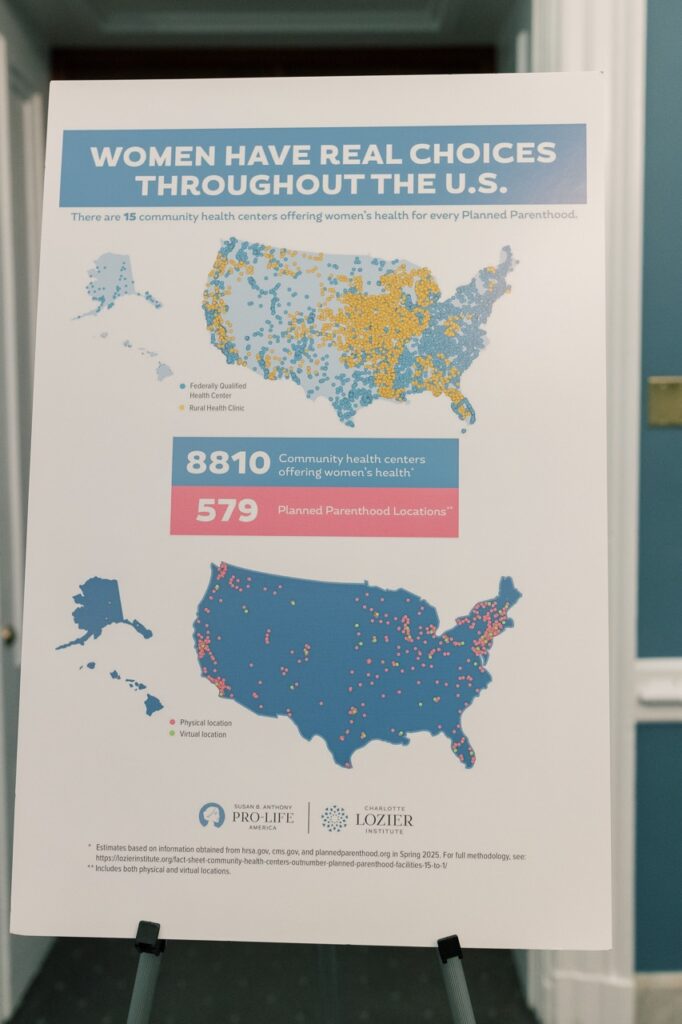
“These federally qualified health centers and rural health clinics aren’t just available — they’re thriving,” Cox said. “They provide comprehensive care: OB-GYN services, pediatrics, dental care, mental health, and more. And they’re doing it without relying on abortion to keep the lights on.”
Cox highlighted a new CLI paper by Jeanneane Maxon, Funding the Nation’s Largest Abortion Business: An Investigation into Public and Private Support of Planned Parenthood, which details how Planned Parenthood received over $792 million in taxpayer funding in 2023, despite narrowing its focus almost exclusively to abortion. In contrast, Federally Qualified Health Centers and Rural Health Clinics receive federal support to deliver holistic care to underserved communities.
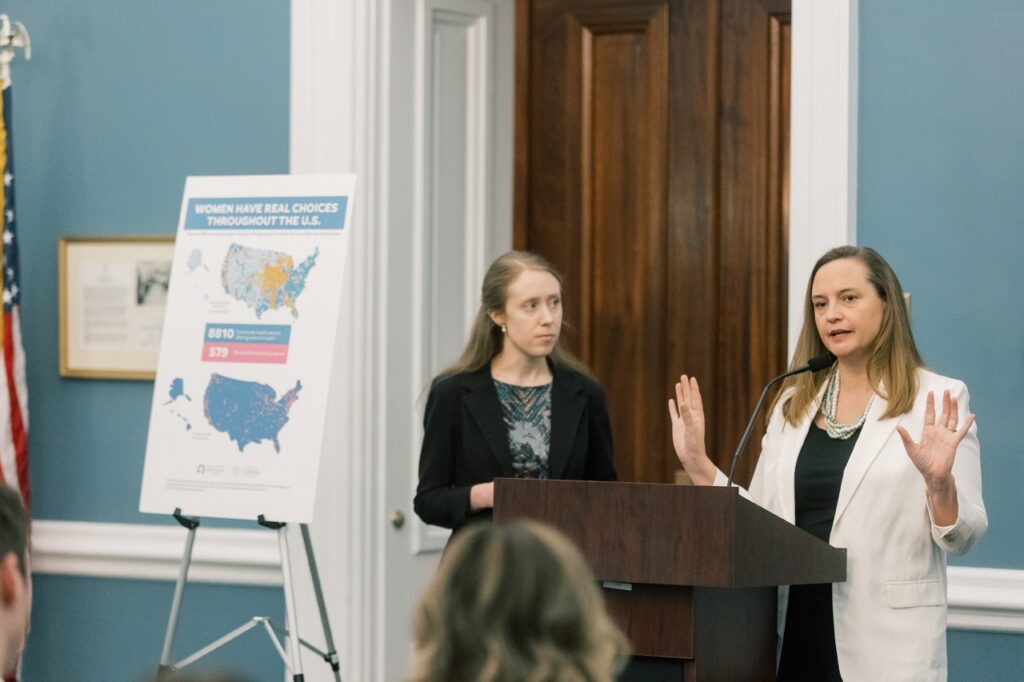
As the briefing wrapped up, staffers engaged in an informative Q&A. Both Autumn and Tessa fielded questions with clarity, equipping attendees with data and insight they can bring back to their offices as budget discussions move forward.
By delivering timely research and pro-life policy expertise directly to Capitol Hill, SBA and CLI continue to shape the conversation — not just among lawmakers, but among the trusted staff who help drive their decisions. Their expertise also provides confidence to the legislators as they debate these important issues.
As Autumn put it, “This is about making sure taxpayer dollars go to real care — not to abortion providers who’ve made it clear what their true priorities are.”
Start a Fundraiser

We fight for the voiceless everyday and we want you to stand with us. Become a Champion of LIFE by being an official fundraiser for SBA.
Fundraise